

Epiphany
Strangers bring the love.

Matthew 2:1-12
In the time of King Herod, after Jesus was born in Bethlehem of Judea, wise men from the East came to Jerusalem, asking, “Where is the child who has been born king of the Jews? For we observed his star at its rising, and have come to pay him homage.” When King Herod heard this, he was frightened, and all Jerusalem with him; and calling together all the chief priests and scribes of the people, he inquired of them where the Messiah was to be born. They told him, “In Bethlehem of Judea; for so it has been written by the prophet:
`And you, Bethlehem, in the land of Judah,
are by no means least among the rulers of Judah;for from you shall come a ruler
who is to shepherd my people Israel.’”
Then Herod secretly called for the wise men and learned from them the exact time when the star had appeared. Then he sent them to Bethlehem, saying, “Go and search diligently for the child; and when you have found him, bring me word so that I may also go and pay him homage.” When they had heard the king, they set out; and there, ahead of them, went the star that they had seen at its rising, until it stopped over the place where the child was. When they saw that the star had stopped, they were overwhelmed with joy. On entering the house, they saw the child with Mary his mother; and they knelt down and paid him homage. Then, opening their treasure chests, they offered him gifts of gold, frankincense, and myrrh. And having been warned in a dream not to return to Herod, they left for their own country by another road.
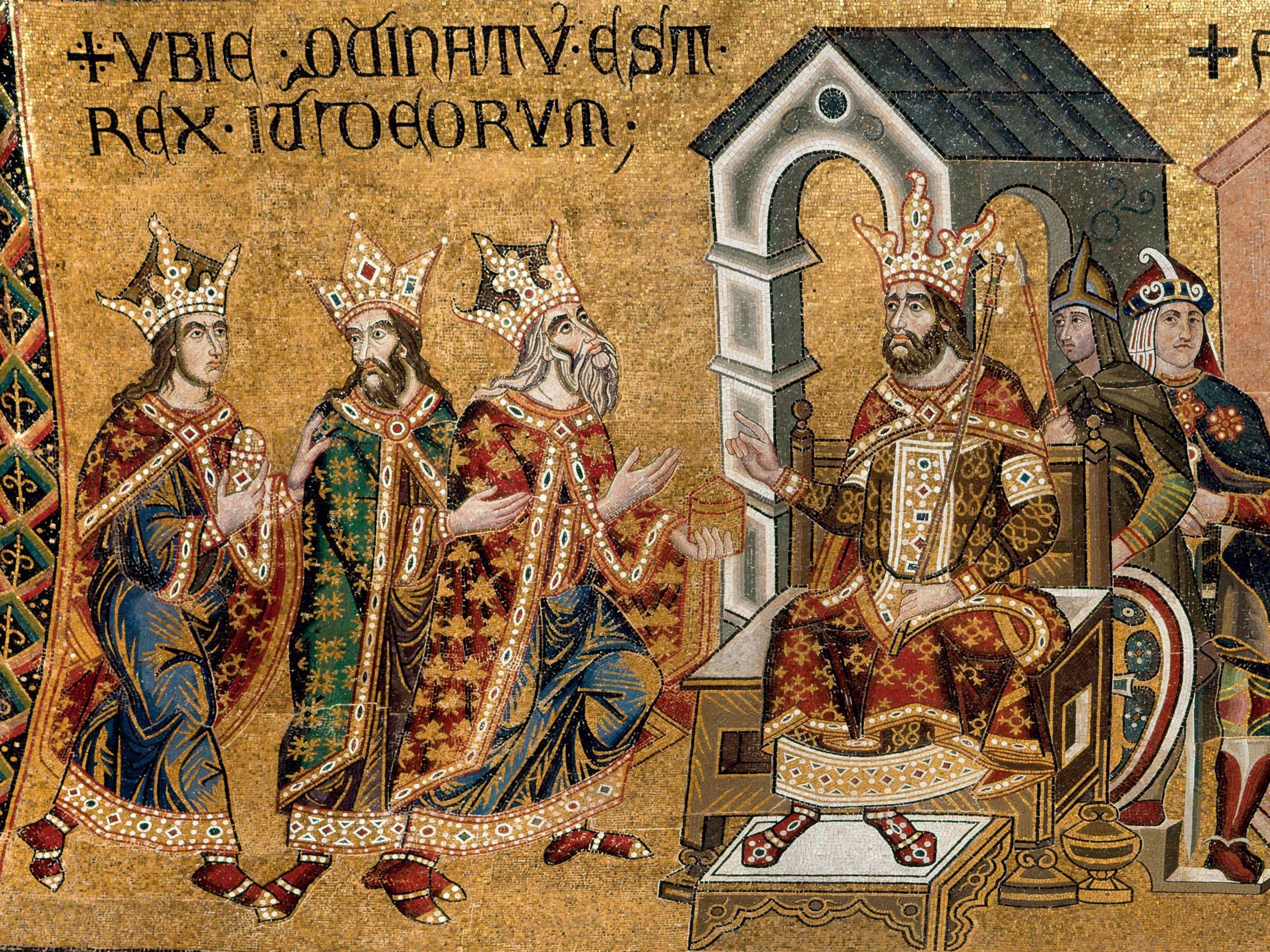
“In the time of King Herod,” Matthew begins, was not a good time for anyone, especially the Jewish people. Herod is a client king installed by the Roman Senate around 36 BCE. The people didn’t choose him, and God did not anoint him, he rules at the behest of Rome. He is a servant of Rome, a middle management oppressor. Herod is not Jewish by birth. His father converted and his mother was an Arabian princess. Herod was chosen to rule over Judea because he was Rome’s yes man, he was seen as a good administrator and for a volatile but strategic region he was able to maintain stability.
But Herod’s legitimacy is constantly under threat because of his tenuous tie to Judaism. He has no relationship to King David, the only way one could be King of the Jews. Let’s not forget his frail ego and that makes him violently paranoid. So much so, that he kills anyone he thinks might threaten his throne. He executes his own sons. He has his beloved wife, Mariamnem, a Hasmonean princess, a legitimate heir to the throne, executed because he suspects she’s been unfaithful. He falls into a deep depression, never recovering from his insane paranoia and grief.
Besides the violent paranoia and killing his family, he is known for being a prolific builder. He rebuilds Jerusalem after it’s been destroyed in a siege by Marc Antony. He expands the Temple Mount into one of the greatest architectural wonders of the ancient world. He keeps strict Jewish law in his household. He builds massively so his name will never be forgotten. And yet—his authority is always in question. Because the people want a king from the line of David. And Herod is not that.
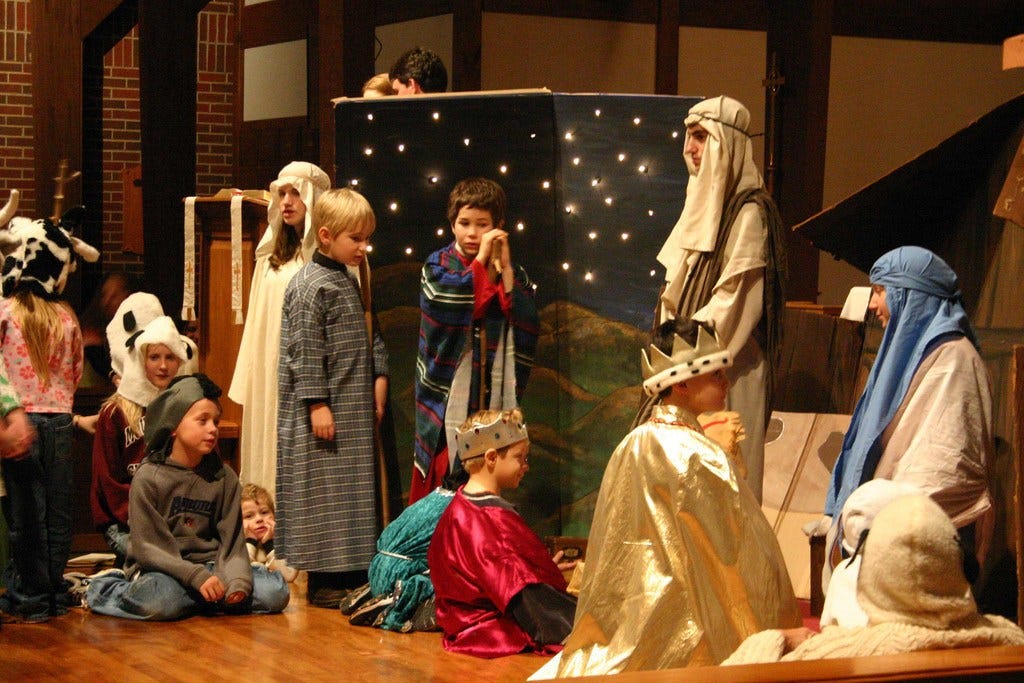
It’s easy to sanitize the story of Epiphany, focusing on the star, three kings, and camels, and children in robes with crowns, from all the Christmas pageants we’ve seen. But the story Matthew tells is a story that is spiritually subversive, politically charged, and terrifying, if your Herod the Great. So it’s huge threat to the status quo, not a curiosity when strangers from the East arrive in Jerusalem asking, “Where is the child who has been born king of the Jews?”
Matthew is introducing us to two competing claims to kingships. One backed by Rome, violence, fear and bloodshed, and one backed by a baby. Herod represents the resistance of this world to the reign of God. He is what power looks like when it is terrified of losing control. And the chief priests, scribers and religious professionals and experts are the ones who help Herod.
The chief priests are the ruling priestly class, deeply invested in the Temple system. The scribes are not secretaries, they are trained interpreters of religious and civil law. They know the scriptures and the prophecy, they know where the Messiah is supposed to be born. And they do absolutely nothing with that knowledge. They don’t go to Bethlehem, rejoice or worship. Matthew is foreshadowing the resistance Jesus will face later in his life. The opposition doesn’t come from ignorance. It comes from people who know better and choose safety instead.
And then there are the Magi. The Magi are not kings. They were astrologers, and dream interpreters. Pagan priests from Persia or Babylon. Outsiders in every way that matters.
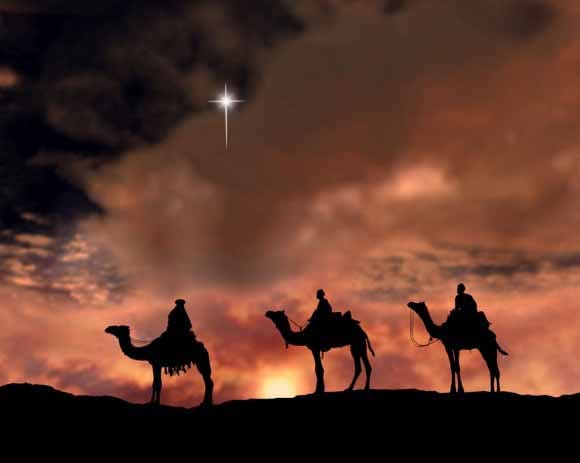
Astrology in the ancient world was considered a serious discipline, almost a science. There was a widespread belief that the birth of a great leader would be marked by a cosmic sign. A star. And for centuries people have tried to prove whether there really was a comet or a conjunction or a supernova. Matthew does not care because it doesn’t matter if the star can be scientifically verified. What does matter is that God uses the language the Magi understands to draw them into the greatest story ever told.
The Magi are searching for meaning, for truth. They don’t have a bible, or know who the prophets are, and they definitely aren’t waiting for the Messiah of Israel. In being guided to the place Jesus is born, they are being guided to God.
“A star shall come out of Jacob.” Numbers 24:17. Matthew knows the tradition of connecting the Messiah to a star and what he does with it is outside the box in every way. He shows Gentiles recognizing what insiders miss. The Magi don’t just admire the star or interpret its meaning or write papers about it. They follow it. Not to the palace but to the manger and the feet of a baby. Herod hears about the Magi searching for the child born king of the Jews, he has them brought to him. He wants all the information he can get on this newborn. If this baby really is the Messiah the king of the Jews, then he has to be disposed of, lest the Jewish people dispose of him first. The Magi find Jesus, and Mary and Joseph. In reverence they fall to their knees and offer the baby the precious gifts they have brought with them. Not practical gifts for a family with a newborn, but the best they have to offer.
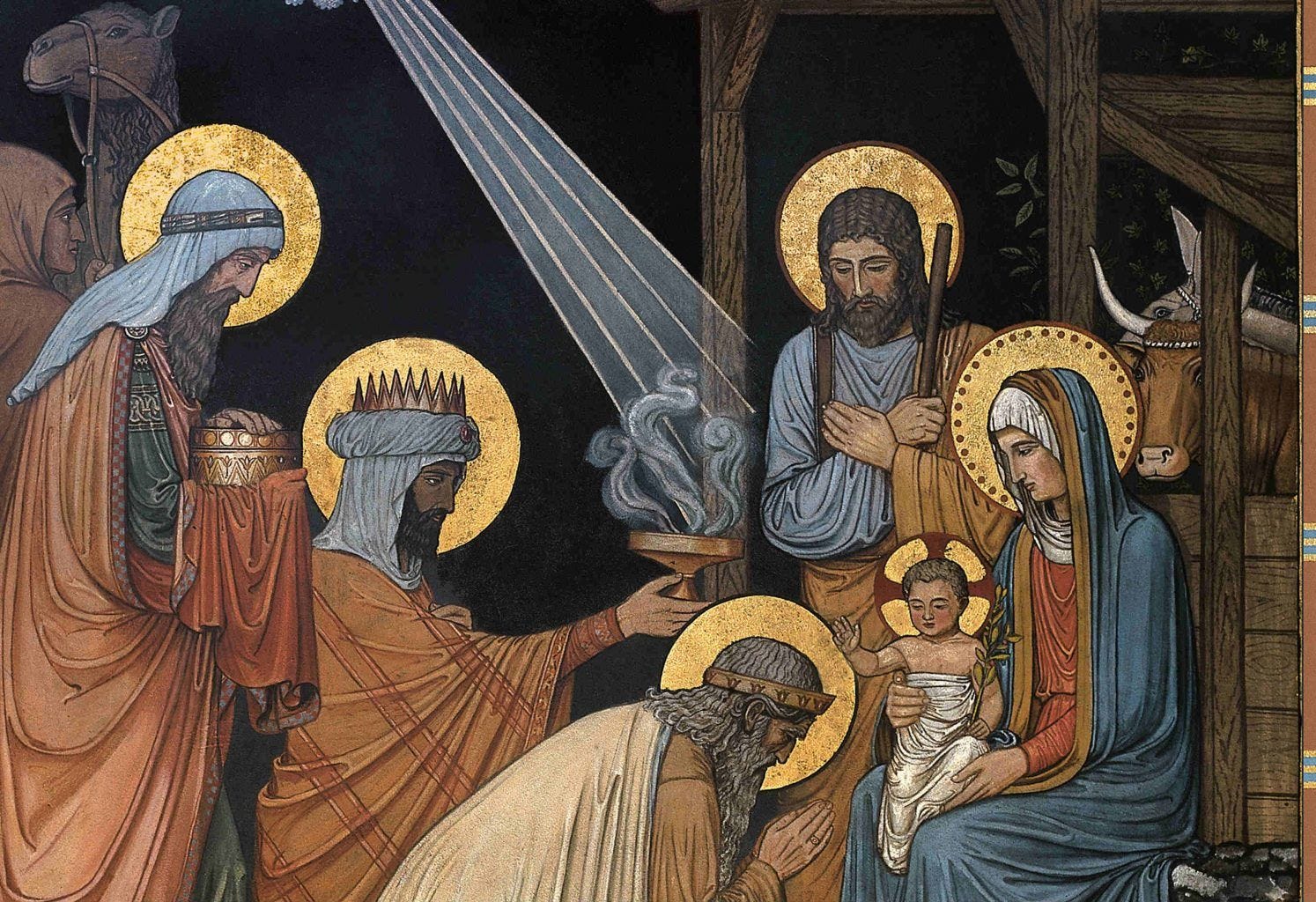
Epiphany is the revelation that Jesus is not just for Israel but for all people. For the whole world. The walls that divide races, cultures, religions and worldviews begin collapsing at the very beginning of his life. Epiphany is not about having all the right things, being from the right place, or having the right background. The Magi shows us it’s about movement, trust, risk. It’s about following the light you’re given even if it leads you somewhere you never expected.
This story in Matthew is recognizing that the reign of God does not look like Herod’s kingdom. It looks like vulnerability, generosity, and outsiders kneeling in wonder. We have a picture of two kings. One that clings to power out of fear and the other who offers himself in love.
May we have the courage to follow the star, wherever it leads us.
May we resist the kingdoms built on power, violence, and control.
And may we bring the best of what we have, however imperfectly.
Amen.